
Table of Contents
ToggleWhat Is PA66 Standard Grade?
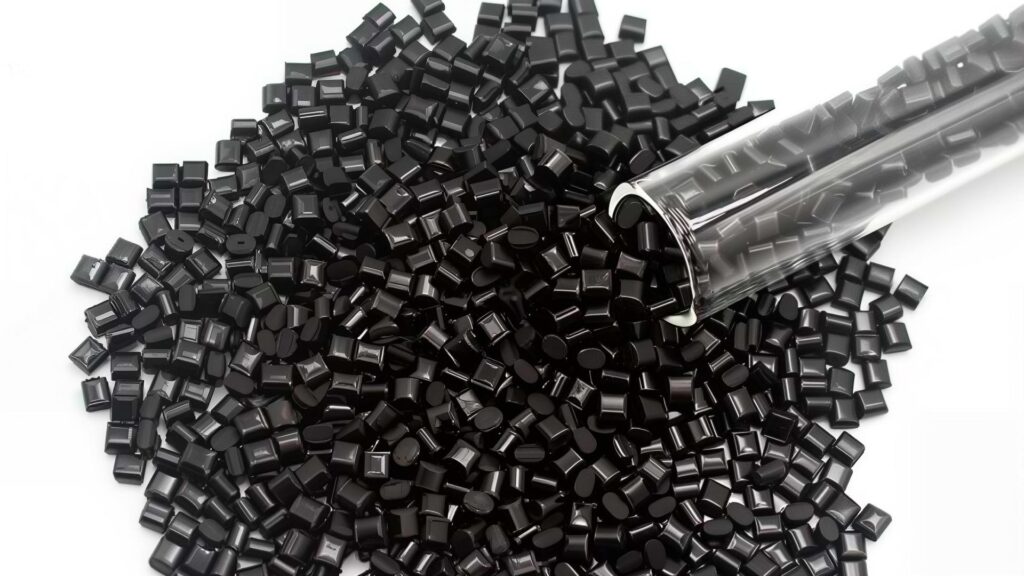
PA66 (Polyamide 66), commonly referred to as Nylon 66, is one of the most widely used engineering thermoplastics in the world. It is a standard grade unmodified polymer known for its high mechanical strength, stability under heat, and chemical resistance, making it a benchmark material for demanding technical applications.
In its basic form — Standard Grade PA66 — the resin contains no reinforcing fillers or performance-enhancing additives. This simple composition delivers a balanced set of properties ideal for general industrial use, including electrical components, automotive parts, and cable management solutions such as PA66 cable ties.
Material Characteristics of PA66 Standard Grade
- Mechanical Strength
Standard grade PA66 exhibits high tensile strength and stiffness, essential for load-bearing applications where parts must resist deformation and creep under stress. - Thermal Performance
PA66 has a relatively high melting point (~255–265 °C) compared to many other common engineering plastics, allowing it to perform reliably in elevated temperature environments. - Chemical Resistance
It resists oils, fuels, solvents, and many industrial chemicals, making it suitable for use in environments where exposure to harsh substances is expected. - Environmental Stability
Standard PA66 has good dimensional stability when exposed to humidity and temperature cycles, although like most nylons, it can absorb moisture to some extent, which designers must account for.
These combined properties make Standard Grade PA66 a highly versatile engineering polymer for both structural components and functional parts.
Applications of PA66 Standard Grade
Standard PA66 plays a core role in multiple sectors due to its performance profile:
Industrial Components:
Gears and bearings
Bushings and sliders
Wear-resistant parts
Electrical & Electronics:
Connectors and housing
Fastening elements
Cable management products like PA66 cable ties (learn more in our article on Cable Tie Material Guide)
Automotive & Mechanical:
Under-hood components
Structural clips
Mounting brackets
For products that require enhanced properties beyond the unfilled state (e.g., heat stability, UV resistance, flame retardancy), there are specialized PA66 grades — though the standard grade remains the go-to for cost-effective general use.
Why Standard PA66 Is Common in Cable Ties
In cable management, especially for electrical installations, materials must balance strength, durability, and environmental resistance:
High Tensile Strength: Keeps bundles secure under tension.
Heat Resistance: Maintains integrity around electrical enclosures or equipment.
Chemical Durability: Performs well around oils and industrial cleaners.
For these reasons, many standard cable ties — including economy yet performance-oriented models — are manufactured using PA66 standard grade resin. Linking these material fundamentals with product performance helps users choose the correct solution for their installation needs.
👉 For example, check out our PA66 Cable Ties Product Page and Heavy Duty Cable Ties Range to see how materials translate into finished products that meet various performance requirements.
Property Summary (Standard PA66)
| Property | Characteristic |
|---|---|
| Polymer Type | Semi-crystalline polyamide |
| Density | ~1.14–1.15 g/cm³ |
| Melting Point | ~255–265 °C |
| Tensile Strength | Moderate to high (baseline unfilled) |
| Chemical Resistance | Good against oils and fuels |
| Moisture Absorption | Moderate (design consideration) |
This table highlights the essential traits that make PA66 standard grade suitable for cable ties and other general industrial applications.
Material Selection Considerations
When choosing PA66 standard grade for a design:
Environment: Standard PA66 handles typical industrial temperature and humidity, but consider specialized grades for higher heat or UV exposure.
Load: Evaluate expected tensile forces — higher load scenarios might require reinforced or heat-stabilized PA66.
Compliance: Standard PA66 meets common electrical and environmental criteria, but certain applications demand UL, RoHS, or flame rating compliance.
These considerations align material choice with functional and regulatory requirements, helping optimizers and engineers specify the right solution more confidently.
👉 Learn more in our PA66 Material Comparison Guide which dives into how standard grades differ from specialty grades like UV-resistant or glass-filled.
PA6 vs PA66
PA6 (Nylon 6) and PA66 (Nylon 66) are both high-performance, semi-crystalline engineering plastics with similar, yet distinct, properties. PA66 offers higher strength, superior rigidity, and better heat/chemical resistance, making it ideal for high-stress, high-temperature automotive applications (e.g., engine parts). PA6 provides better toughness, easier processing, and is generally more cost-effective, often used for molded components requiring high impact resistance.
Comparison Table: PA6 vs PA66
Properties | PA6 | PA66 |
| Molecular Structure | Single repeating unit | Two repeating units |
| Density (g/cm³) | 1.13 | 1.14 |
| Melting Point (°C) | 220 | 260 |
| Water Absorption | Higher | Lower |
| Crystallinity | Lower | Higher |
| Tensile Strength (MPa) | Lower | Higher |
| Impact Resistance (kJ/m²) | Higher | Lower |
| Thermal Stability (°C) | Continuous use up to 180°C | Continuous use up to 200°C |
| Processing Temperature (°C) | 230 – 250 | 270 – 290 |
| Molding Temperature (°C) | 80 – 100 | 90 – 120 |
| Molding Shrinkage (%) | 0.6 | 0.8 |
| Heat Deflection Temperature (°C) | 170 | 250 |
Conclusion
PA66 Standard Grade is a foundational engineering plastic that balances mechanical performance, temperature endurance, and chemical resistance in a cost-effective unmodified form. Its versatility makes it a go-to choice for general-purpose industrial components and cable management products, offering both reliability and broad applicability across sectors such as electronics, automotive, and manufacturing.