
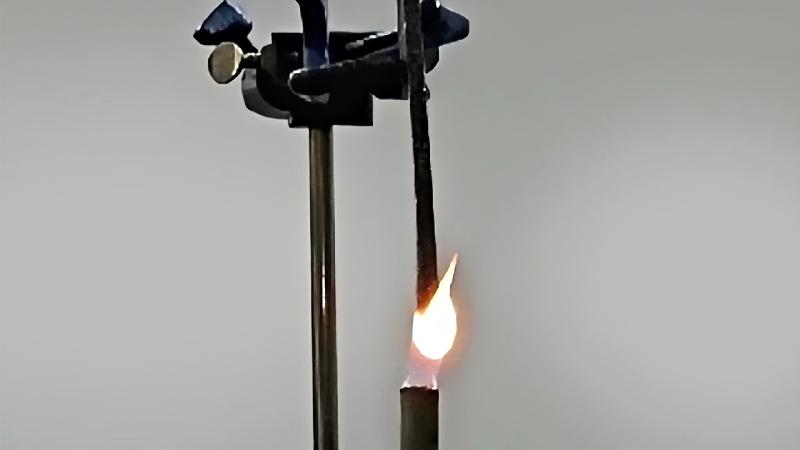
UL 94 V2 Flame Retardant Rating is a standardized classification for evaluating the flammability of polymer materials used in devices and component assemblies. For cable ties, flame retardancy is a critical safety requirement in electrical systems, automotive applications, power distribution, and enclosed environments where ignition and fire propagation must be minimized.
The UL94 standard classifies how materials burn when exposed to flame in both vertical and horizontal orientations, determining the material’s ability to self-extinguish and prevent dripping.
Table of Contents
ToggleUL94 Rating Categories Relevant to Cable Ties
While UL94 includes several grades, the most relevant for cable tie applications are:
| Rating | Test Orientation | Behavior Requirement |
|---|---|---|
| UL 94 HB | Horizontal | Slow burning rate |
| UL 94 V2 | Vertical | Flame self-extinguishes; drips allowed |
| UL 94 V1 | Vertical | Faster self-extinguishing; no flaming drips |
| UL 94 V0 | Vertical | Most stringent; fastest extinguishing; no flaming drips |
For industrial cable ties, UL 94 V2 and UL94 V0 are the most commonly supplied specifications due to safety compliance in electrical and OEM systems.
Material Impact on Flame Retardancy
Cable tie flame performance depends strongly on formulation:
| Material / Grade | UL94 Behavior |
|---|---|
| PA66 Standard | Typically UL94 HB or no rating |
| PA66 Flame Retardant | Can achieve V-2 / V-0 with additives |
| Heat-Stabilized Nylon | Often V-2 |
| UV-Stabilized Nylon | Performance varies; not necessarily fire-rated |
| Stainless Steel | Non-combustible |
Stainless steel cable ties do not require UL94 classification because metallic materials do not support combustion, making them ideal in high-risk environments such as tunnels, offshore platforms, utilities, and petrochemical installations.
Application Relevance
UL94 ratings are mandatory or preferred in:
Electrical control panels
EV/automotive wiring harnesses
Consumer electronics
Rail & metro infrastructure
Power distribution systems
Telecommunications & data centers
Building HVAC systems
Aerospace & aviation cabling
In confined or cable-rich environments, flame retardant performance significantly reduces risk of propagation during electrical shorts or thermal overload.
Testing Principles
UL94 tests evaluate:
Ignition duration
Self-extinguishing capability
Droplet behavior
Afterglow duration
Flame propagation
Vertical tests (V-series) simulate real-world burn scenarios more accurately than horizontal tests (HB), therefore representing a stricter safety criterion.