
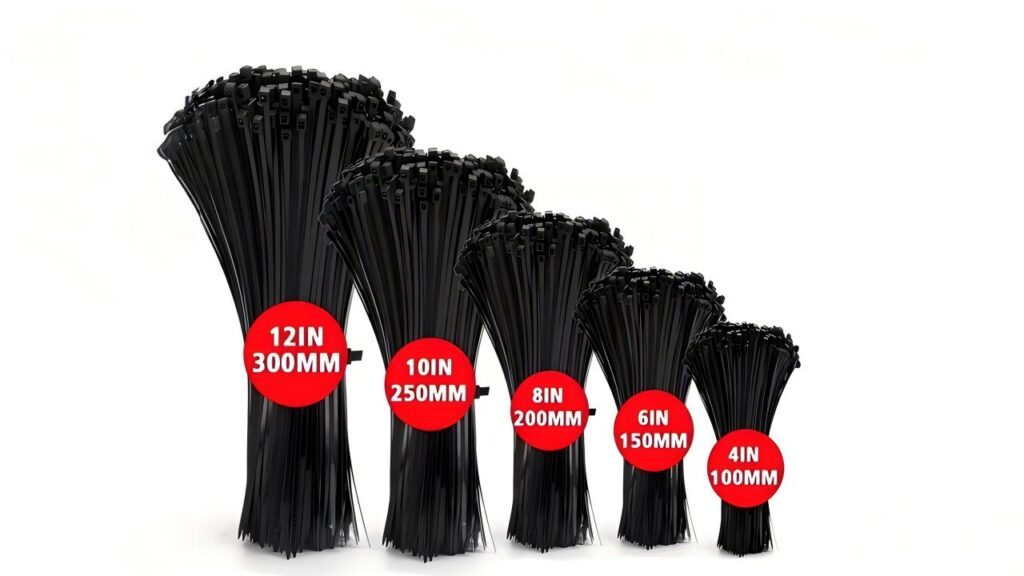
Cable ties may look simple, but their performance depends heavily on correct sizing and specification. Choosing the wrong length or width can result in insufficient holding strength, poor durability, or even cable damage. For electrical, industrial, and outdoor applications, understanding cable tie specifications is essential.
This guide explains cable tie dimensions in detail—from length and width to tensile strength—and provides practical selection tips to help users choose the right cable ties for different applications.
Understanding Cable Tie Length
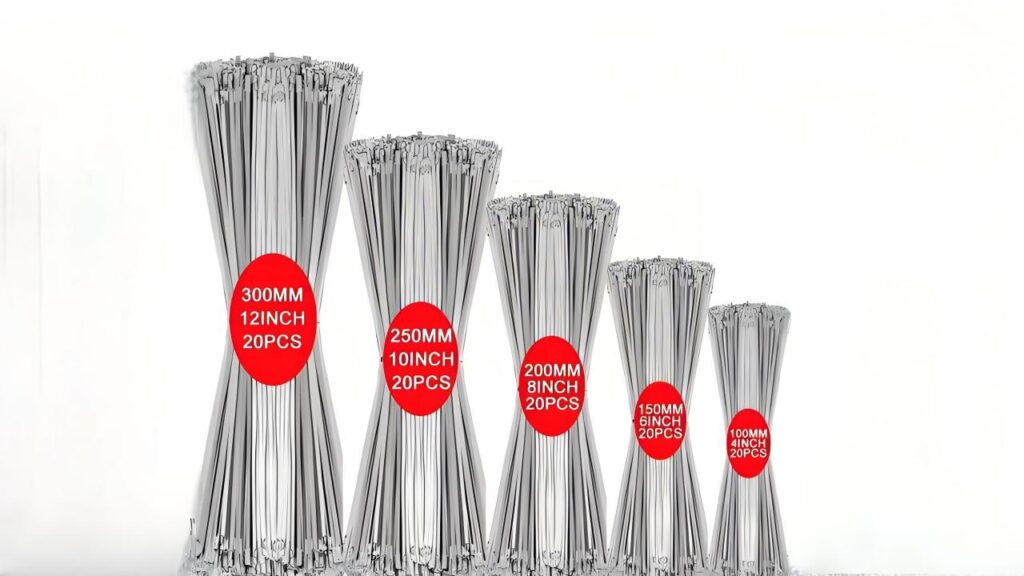
Cable tie length refers to the total length of the tie when laid flat, usually measured in millimeters or inches. Length determines the maximum bundle diameter a cable tie can secure.
Common cable tie lengths include:
- 100 mm / 4 inch
- 150 mm / 6 inch
- 200 mm / 8 inch
- 300 mm / 12 inch
- 370 mm and above for heavy-duty use
How to choose the right length:
- Measure the bundle diameter first
- Add extra length for the locking head and tail
- Avoid using overly long cable ties, which may reduce neatness and efficiency
Shorter ties are suitable for small wire bundles, while longer ties are used for thick cables, pipes, or structural fastening.
Cable Tie Width and Its Importance
Width is one of the most critical specifications of a cable tie, as it directly affects tensile strength.
Typical cable tie widths:
- 2.5 mm – light-duty applications
- 3.6 mm – general-purpose use
- 4.8 mm – medium-duty use
- 7.6 mm – heavy-duty applications
- 9.0 mm and above – industrial and structural use
Why width matters:
- Wider ties provide higher tensile strength
- Narrow ties are easier to route in tight spaces
- Incorrect width selection may cause premature failure
For industrial or outdoor use, wider cable ties are usually preferred.
Tensile Strength Explained
Tensile strength indicates the maximum pulling force a cable tie can withstand before breaking, typically measured in newtons (N) or kilograms-force (kgf).
As a general rule:
- Increased width = increased tensile strength
- Material quality also plays a major role
For example:
- A 2.5 mm nylon cable tie may offer around 8 kg tensile strength
- A 4.8 mm cable tie may reach 22 kg or more
- Stainless steel cable ties can exceed 90 kg
Always select a tensile strength higher than the expected load to maintain safety margins.
Thickness and Locking Head Design
Although less visible, thickness and locking head structure also influence performance.
Key considerations include:
- Thicker straps improve durability
- Reinforced locking heads provide better vibration resistance
- Smooth internal surfaces reduce cable abrasion
High-quality cable ties maintain consistent thickness along the strap and precise tooth engagement in the locking mechanism.
Material Specifications and Their Impact
Cable tie material affects size selection and performance.
- Standard nylon (PA66): Good flexibility and strength for general use
- UV-resistant nylon: Better suited for outdoor installations
- Heat-resistant nylon: Maintains strength at elevated temperatures
- Stainless steel: Ideal for extreme, heavy-duty, or corrosive environments
Material choice should align with both size and environmental requirements.
Color and Special Specification Options
Color is not just aesthetic—it can be functional.
Common uses include:
- Black cable ties for UV resistance
- Colored ties for circuit identification
- Natural (white) ties for indoor applications
Special specification cable ties may also include:
- Flame-retardant ratings
- Metal-detectable properties
- Releasable locking mechanisms
Practical Cable Tie Selection Tips
When selecting cable ties, consider the following steps:
- Identify the application environment (indoor, outdoor, industrial)
- Measure the bundle diameter accurately
- Choose length based on bundle size
- Select width according to required tensile strength
- Match material to temperature, UV, and chemical exposure
- Avoid over-tightening to prevent cable damage
Proper selection reduces maintenance needs and improves long-term reliability.
Common Sizing Mistakes to Avoid
- Choosing length based only on appearance
- Using narrow ties for heavy loads
- Ignoring environmental factors
- Oversizing without considering installation space
Correct sizing improves safety and efficiency.
Conclusion
From length to width, every specification of a cable tie affects its performance and suitability. Understanding cable tie dimensions, tensile strength, and material properties allows users to make informed decisions and select the right product for each application. Proper sizing not only ensures secure fastening but also extends service life and improves overall system reliability.