
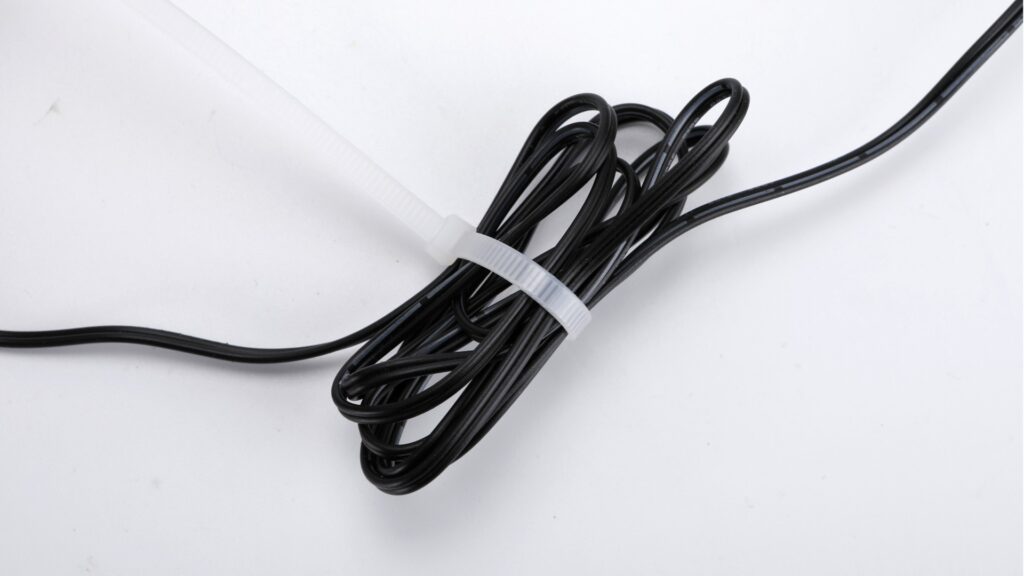
How to Loosen a Cable Tie? Most people have encountered this problem in their daily lives. When you need to Loosen a Cable Tie, it usually feels harder than when you install them.
Cable ties are simple, inexpensive, and durable, but they also have a drawback: once tightened, many people cannot safely and efficiently remove them without damaging the cables or injuring themselves.
This guide will help you solve this long-standing problem, providing solutions whether you need to loosen, cut, or remove cable ties without tools, or in emergency situations. At the end, we will also introduce cable tie recycling methods, as proper disposal is equally important.
Table of Contents
ToggleHow to Loosen a Cable Tie (Safely & Cleanly)
Most cable ties are designed for single use, which makes it challenging to loosen a Cable Tie without the right tools, which means it can be very difficult to open them again. Of course, we can safely remove the cable ties if we choose the right method.
Method 1: Cut the cable ties using appropriate tools
The safest and most effective way to remove cable ties is to use flat-nose pliers or electrician’s pliers to cut them short. (Do not use scissors or knives to cut cable ties, as their openings are very sharp and can easily damage the bundled items.)
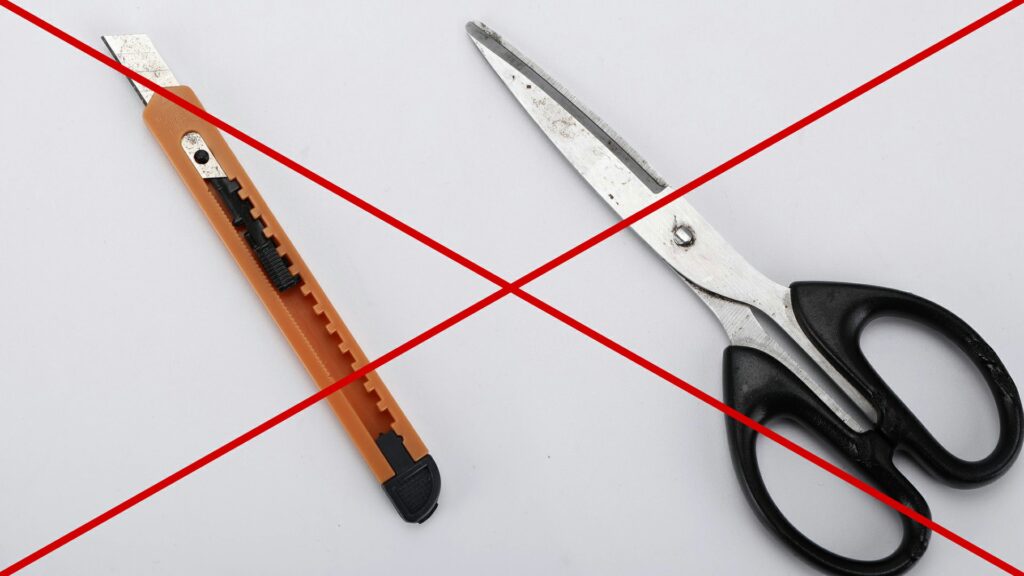
We should grip the bundle firmly, leaving a certain gap between the cable tie and the bundle, and then use flat-nose pliers to make a flat cut at the gap. This avoids the sharp edges from scratching the wires or other bundles and causing unnecessary damage.
Method 2: Loosen the reusable cable tie.
If the cable tie is clearly marked with “releasable” or “reusable,” there is usually a small release button at the lock head, as shown in the picture below:
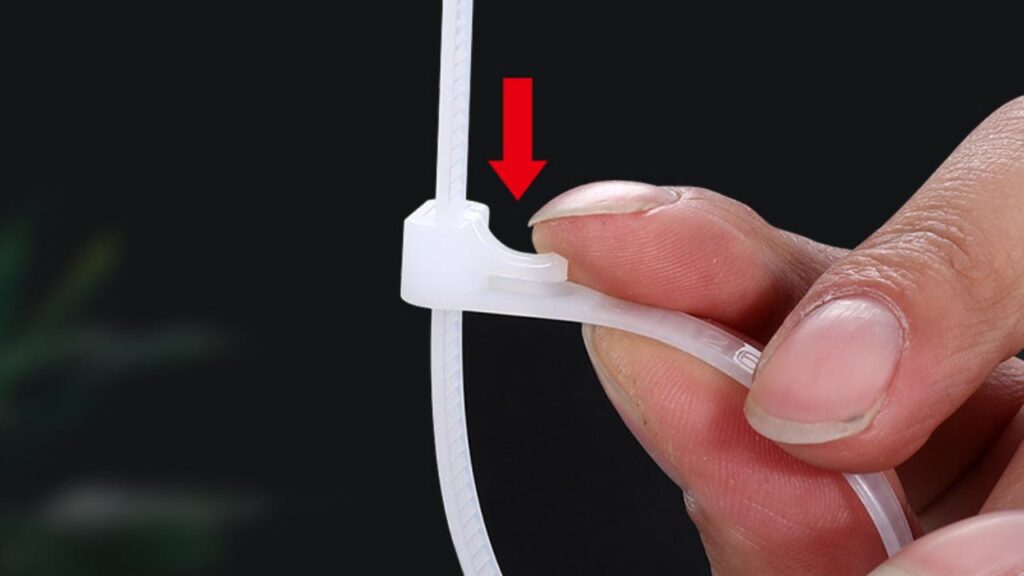
Simultaneously pull the end of the cable tie backward. This type of cable tie is commonly found in IT racks, does not require cutting, and is assumed to be non-reusable if there is no release button.
How to Loosen a Cable Tie (Without Cutting It)
Some users want to loosen a Cable Tie without destroying it, especially when the installation needs adjustment.
Method 1: Use a flathead screwdriver
If you want to reuse the cable tie or don’t want to cut it, you can use some common everyday tools, such as a small flathead screwdriver or a SIM card ejector tool: Insert the tool between the pawl and the cable tie, gently press the tool to lift the pawl, and simultaneously pull the cable tie back to release it.
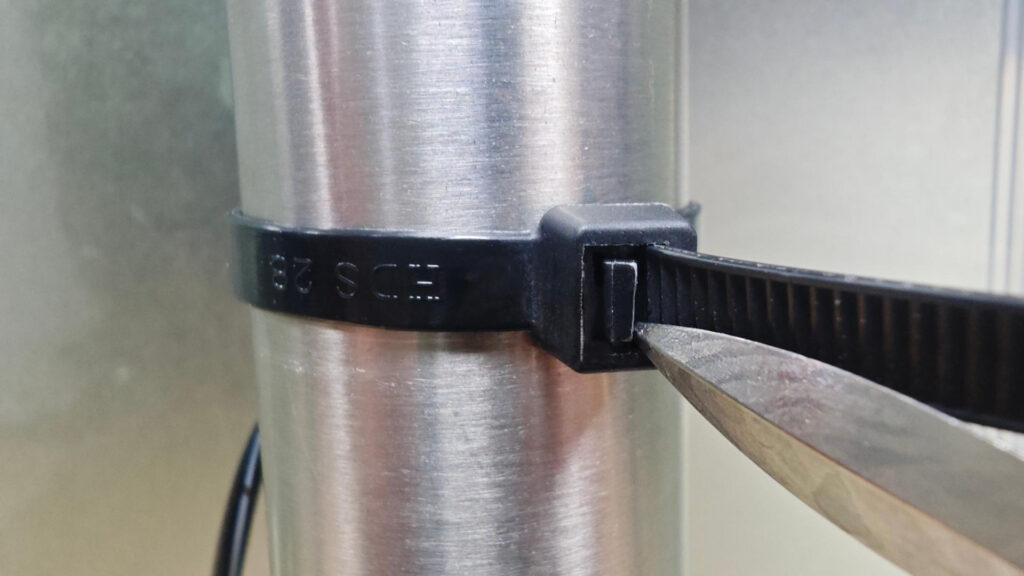
This Loosen a Cable Tie method is more suitable for slightly thicker nylon cable ties.
Method 2: Longer fingernails
Step 1: Secure the binding point with your hand or a tool, pushing the excess end of the cable tie outwards as much as possible.
Step 2: Using the gap created by pushing outwards, insert your fingernail or the end of another cable tie and pinch the locking cap.
Step 3: Push the end of the cable tie inwards or pull the cable tie at the bundled object outwards.
Step 4: Do not release the locking cap until the entire cable tie is removed, otherwise it will lock again, requiring you to start from Step 1 again.
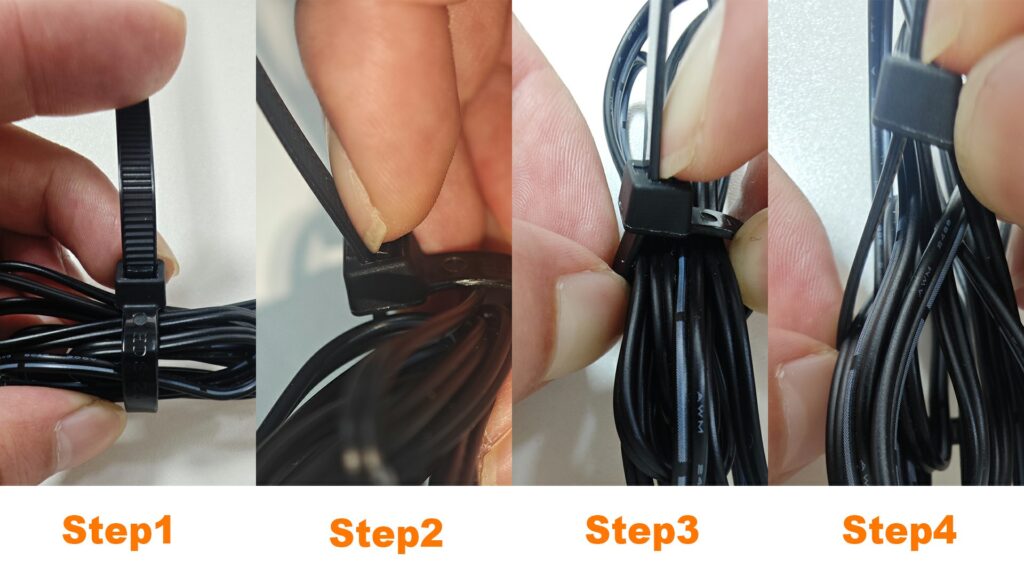
This Loosen a Cable Tie method is more suitable for slightly smaller nylon cable ties.
Repeated use can cause cable ties to become deformed and difficult to work with; therefore, it is not recommended to reuse disposable cable ties multiple times.
How to Cut a Cable Tie (Without Damaging Wires)
This is one of the most common questions, especially in electrical work.
Best tools
- Flush cutters (cleanest)
- Side-cutting pliers
- Cable tie cutters (professional tool that avoids sharp stubs)
Avoid
- Knives or box cutters
- Scissors near live wires(cuts cables and creates hazards)
- Twisting the tie by hand (causes jagged edges that cut skin)
Technique
After tightening the bundle, slide one side of the tool between the cable tie and the cable, then cut the cable tie outward.
How to Get Out of Cable Ties (Emergency Situations)
If someone’s hands are tied with cable ties in an emergency (accident, industrial entanglement).
Cable ties can fail at a specific tensile strength. Overloaded or defective ties snap under tension. Safety shears can be used to undo cable ties during entanglement hazards
You can use any readily available object to slide and rub the cable tie back and forth at its anchor point (increasing its temperature and damaging its structural properties, thus reducing its performance).
Are Cable Ties Recyclable?
As the global cable tie industry continues to develop, many problems have also emerged.
Made of nylon 6/6, theoretically recyclable, but…
Most recycling plants do not accept nylon cable ties because they are mostly small and contain many other impurities, making it very difficult to separate the main materials after mixing them together.
Large industrial users will send used cable ties to professional nylon recyclers, but this is rare.
Fully recyclable
Most metal recyclers accept stainless steel cable ties, making them the best environmentally friendly option for reusable cable ties.
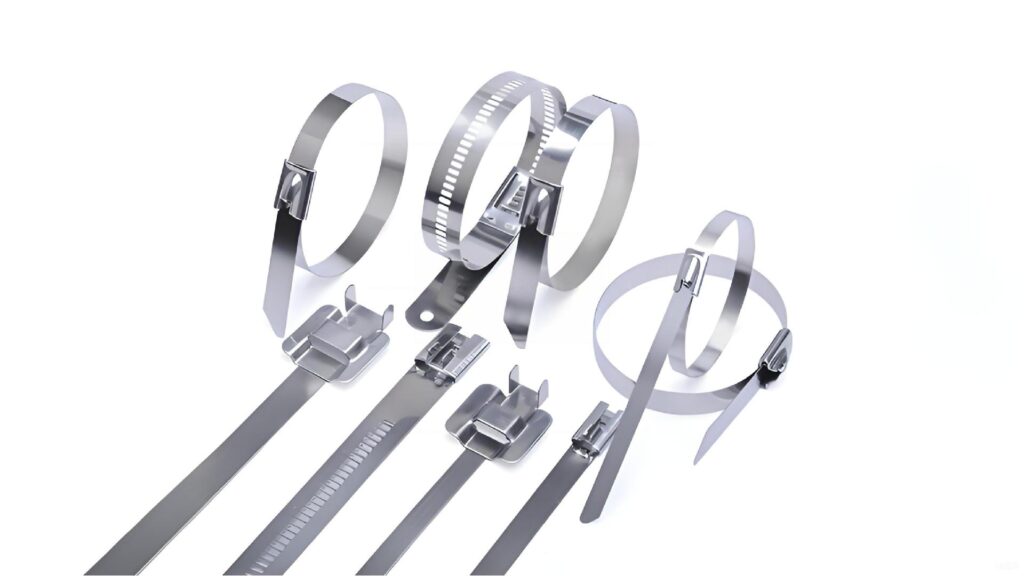
If sustainability is a priority for you, we recommend using: detachable nylon cable ties, Velcro cable ties, or stainless steel cable ties.
how to undo stainless steel cable ties
The core method for removing stainless steel cable ties is to utilize their self-locking mechanism. By using a tool to push the steel ball inside the metal buckle to release the latch, the cable tie can be pulled out. Below are the specific operating steps and recommended tools:
Stainless steel cable ties are self-locking via a steel ball inside the metal buckle (it locks when pulled in the opposite direction). To disassemble, the buckle must be released:
Locate the metal buckle: Locate the square or round metal buckle at the head of the cable tie and check for any visible gaps or small holes.
Push the steel ball: Insert the tip of another stainless steel cable tie into the gap of the target cable tie’s metal buckle, pressing against the internal steel ball (approximately 1.5mm in diameter) and gently push it outwards.
Alternatively, use a thin, hard tool (such as a toothpick or embroidery needle) to insert into the gap and hold the steel ball in place.
Remove the cable tie: After the steel ball moves outwards, the buckle releases. Immediately pull the cable tie out at a steady pace in the opposite direction, avoiding excessive force that could deform it.
Recommended Tools and Precautions
High-Efficiency Tools: For frequent disassembly, specialized tools (such as diagonal pliers or cable tie hooks) are recommended for precise operation without damaging the cable ties.
Key Precautions:
Wear gloves during operation to prevent scratches, as the rough surface of the steel balls can easily injure your hands.
If the cable ties are rusted, a small amount of lubricant (such as WD-40) can be sprayed to help loosen them.
The cable ties can be reused after disassembly, but should be replaced after being bent more than 3 times.
Conclusion
Learning how to loosen a Cable Tie safely becomes easy once you understand the correct tools and techniques—use appropriate tools to cut or loosen reusable cable ties, or use techniques to loosen standard cable ties.
Cable ties are designed for secure fastening, but they can also be easily removed and managed when done correctly—whether you’re organizing cables, maintaining equipment, or following industrial safety regulations, hopefully this guide will help you.
We offer a wide range of cable ties, including colored nylon zip ties, stainless steel or metal cable ties, and zip ties in sizes from smallest to largest. Shop now at Cable Ties and More!
Cable ties, also known as zipper ties or cable ties, were invented in 1958 by Maurus C. Logan, an engineer at Thomas & Betts, an electrical company in Memphis, Tennessee.
Cable ties are versatile fastening devices primarily used to bundle, organize, or secure cables, wires, and other items. Known for their simplicity and durability, cable ties are a staple in industries like construction, electronics, and automotive repair, as well as for home use.
These ties come in many variations, including:
Nylon cable ties – lightweight and durable
Stainless steel zip ties – ideal for high-temperature and corrosive environments
Releasable tie wraps – reusable and adjustable
Colored cable ties – perfect for color-coded organization
Heavy-duty cable ties – designed for demanding applications