
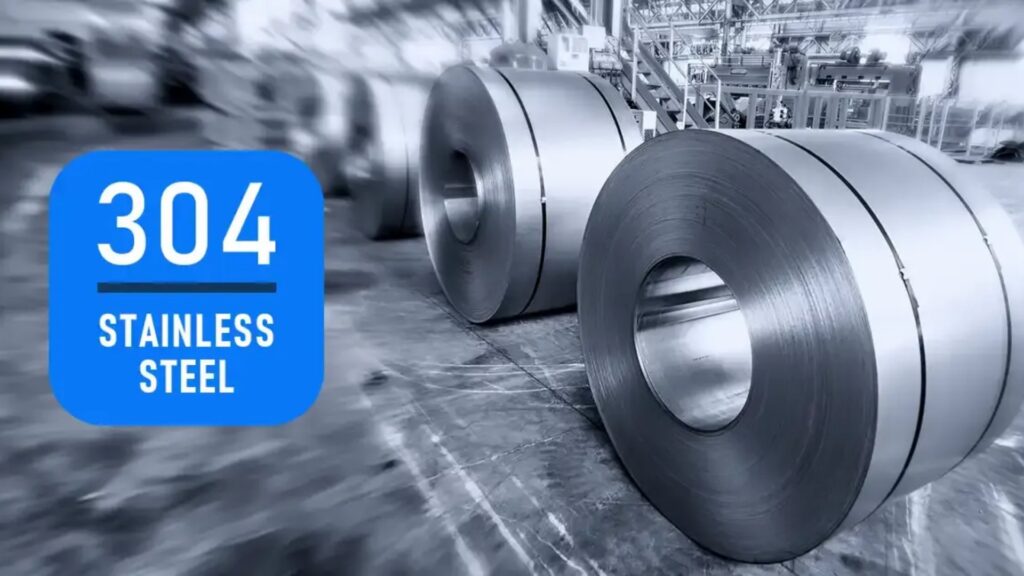
Stainless Steel 304 (SS304) is an austenitic chromium–nickel stainless steel recognized for its excellent balance of corrosion resistance, mechanical strength, and cost-efficiency. As one of the most widely used stainless grades in the world, SS304 serves across sectors ranging from industrial machinery to electrical installations and cable management systems.
In fastening and wire management applications, SS304 is commonly used to manufacture metal cable ties, hose clamps, mounting brackets, and electrical accessories that require durability under harsh service environments.
Table of Contents
ToggleChemical Composition & Alloying Elements
The typical composition of SS304 includes:
| Element | Content (%) |
|---|---|
| Cr (Chromium) | 18–20 |
| Ni (Nickel) | 8–10.5 |
| C (Carbon) | ≤ 0.08 |
| Mn, Si, P, S | Trace amounts |
The 18-8 (18% Cr / 8% Ni) formulation enhances its corrosion resistance and contributes to its well-known mechanical stability.
Key Material Characteristics
• Corrosion Resistance
SS304 demonstrates strong resistance to atmospheric environments, mild chemicals, organic acids, and industrial cleaning agents. This makes it suitable for outdoor installations, factory environments, and coastal inland regions.
• Mechanical Strength
304 provides high tensile strength and elongation, enabling fastening products to secure heavy cables, hoses, and components where plastic ties are not sufficient.
• Heat Resistance
It maintains mechanical integrity at elevated temperatures, generally up to ~450–650 °C depending on service conditions.
• Fatigue & Wear Resistance
The alloy resists deformation and abrasion under cyclic loads, which is beneficial in vibrating machinery or transportation systems.
Relevant Standards & Certifications
Depending on the application sector, the following standards are commonly referenced:
✔ ASTM A240 / A276 — Stainless steel plate/bar specifications
✔ EN 10088 — Stainless steel grade classification
✔ UL 62275 — Cable management for metal ties
✔ RoHS / REACH — Environmental compliance requirements
✔ ISO 9227 — Salt spray test for corrosion ranking
For cable management components specifically, UL 62275 Type 21 has become increasingly relevant in infrastructure, telecom, and solar power installations.
Typical Industrial Applications
Stainless Steel 304 is used across multiple sectors:
Electrical & Cable Management
Cable trays & racking systems
High-temperature cable bundling
Outdoor utility infrastructure
Stainless Steel Cable Ties / Heavy-Duty Cable Ties
Industrial Machinery
Hose and pipe fastening
Motor & vibration equipment wiring
Plant upgrades & maintenance
Stainless Steel Ball-Lock Cable Ties
Transportation & Automotive
Engine bay harnessing near high heat zones
Rail & marine wiring
Protective routing on chassis parts
Petrochemical & Refinery
Exposure to solvents, oils, fuels, corrosive vapors
High-temperature wiring at processing lines
Comparison: 304 vs. 316 Stainless Steel
304 is widely used, but engineering environments sometimes require a comparison against 316:
| Property | 304 | 316 |
|---|---|---|
| Corrosion Resistance | High | Very High |
| Chloride Resistance | Moderate | Excellent |
| Nickel Content | ~8% | ~10–14% |
| Mo (Molybdenum) | — | Present |
| Coastal / Marine Use | Conditional | Preferred |
| Cost | Lower | Higher |
When to Use Stainless Steel Instead of PA66
In engineering projects, actual procurement logic is typically environment-driven rather than material-driven. Metal is chosen over nylon in the following situations:
✔ High heat (>120 °C)
✔ Fire-critical environments
✔ Oil/chemical exposure
✔ High vibration machinery
✔ Long-term outdoor (>10 years)
✔ Required lifetime reliability (Infrastructure/Utilities)
Therefore, metal cable ties have become one of the mainstream solutions in many photovoltaic power plant constructions, communication base stations, and power distribution network applications.
Suitable Product Forms in Cable Management
304 Grade stainless steel is commonly processed into:
✔ Ball-lock cable ties
✔ Ladder-type stainless cable ties
✔ Coated stainless cable ties
✔ Mounting clamps & brackets
✔ Hose clamps
Conclusion
Stainless Steel 304 Grade provides a robust and corrosion-resistant solution for industrial fastening applications, delivering:
mechanical strength
heat tolerance
outdoor durability
compliance compatibility
cost efficiency
Its balance between performance and price makes it one of the most versatile stainless steels in modern electrical and industrial infrastructure.