
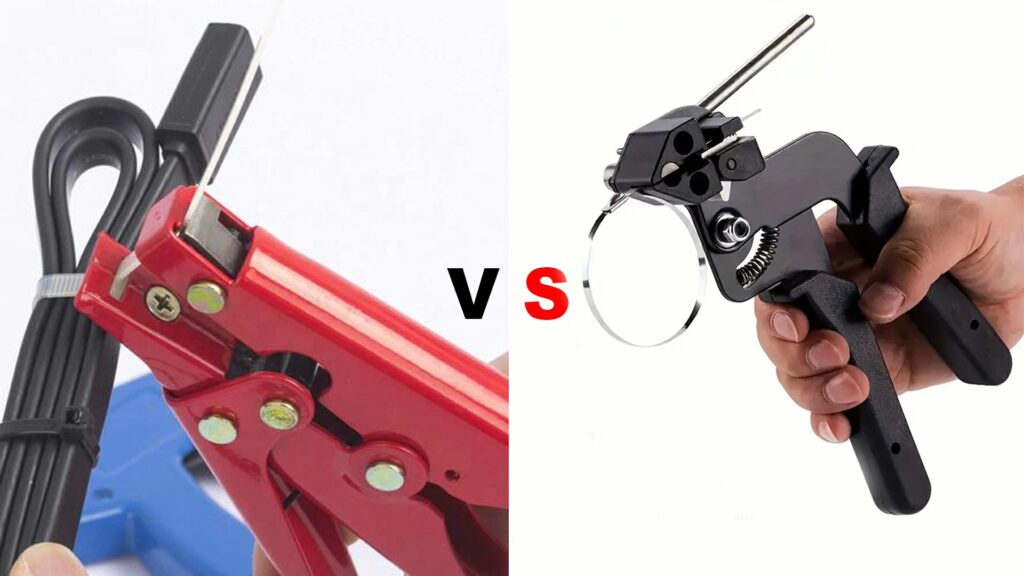
Cable management has become essential across industries ranging from automotive and electrical work to HVAC, facilities maintenance, and large-scale industrial manufacturing. While cable ties (often called “zip ties” in North America) have been widely adopted for decades, the tools used to install them have evolved from basic manual tightening to precise tensioning and controlled cutting. Among these tools, the Zip Tie Gun and the Cable Tie Gun are the two most commonly searched and referenced terms by technicians, DIY users, and procurement departments alike.
Although many users assume both terms describe the same tool, there are notable differences in usage, terminology, and material compatibility—especially when stainless steel cable ties enter the conversation. Additionally, less commonly searched tools like cable tie tensioning tools, cable tie tightening tools, and cable tie installation tools each serve distinct functions in certain industrial scenarios. When working with stainless steel ties, more specialized tools such as stainless steel cable tie guns, metal cable tie tools, and steel cable tie tensioners ensure the necessary tension and cutting force.
This guide compares these tools, explains how each is used, and offers practical recommendations on choosing the right cable tie installation tool for different applications.

Table of Contents
ToggleZip Tie Gun: The Most Common Term in North America
The term Zip Tie Gun is widely recognized and dominates search demand across North America. This terminology aligns with the common use of “zip tie” as a synonym for nylon cable tie, especially in consumer and DIY contexts.
A Zip Tie Gun automates two core steps:
Tightening the tie around a wiring bundle
Cutting excess tail cleanly once tension is reached
For nylon ties, this produces a flush cut that reduces sharp edges and ensures consistent tension across installations. The result is cleaner cable management and minimized risk of damage to wires, hoses, or nearby components due to over-tightening.
Zip Tie Guns are frequently used in:
Automotive wiring harnesses
Consumer electronics repairs
Home improvement projects
Light-duty electrical work
DIY cable organization
Because nylon ties are flexible and lower in tensile strength compared to stainless steel, Zip Tie Guns do not require heavy mechanical leverage or hardened cutting blades.
Cable Tie Gun: Preferred in Industrial and Electrical Contexts
While “Zip Tie Gun” dominates consumer searches, technicians, installers, and procurement teams more often use the term Cable Tie Gun. Functionally, the tool operates similarly—tightening and cutting nylon cable ties—but its terminology reflects an industrial environment where cable ties are part of electrical and wiring standards rather than a DIY accessory.
Cable Tie Guns see widespread application in:
Electrical panel builds
PLC controls and automation
Wire harness production
HVAC service installs
Manufacturing and assembly lines
In these settings, uniform tension is more than an aesthetic requirement—it affects cable reliability, labeling readability, airflow, and safety compliance. Thus, Cable Tie Guns typically include adjustable tension control and cleaner cutting mechanisms to match industry standards.
Expanding Beyond Nylon: Metal and Stainless Steel Cable Tie Tools
When cable ties transition from nylon to stainless steel, a new family of tools becomes necessary. Stainless steel cable ties are designed for:
High-temperature environments
Corrosive or outdoor conditions
Marine and offshore installations
Fire-resistant wiring
Heavy mechanical loads
Industrial manufacturing
Rail and transportation
Nylon Zip Tie Guns cannot apply sufficient leverage to tension or cut stainless steel ties, nor can they withstand the hardness of steel. Instead, installers rely on dedicated Stainless Steel Cable Tie Guns, Metal Cable Tie Tools, or Steel Cable Tie Tensioners to manage these tasks.
These metal-oriented tools typically feature:
Hardened steel blades
Lever-driven tensioning mechanics
Ratcheted tightening controls
Auto or manual cut-off options
The ability to manage stainless steel ties greatly expands cable management into industrial and environmental sectors where nylon would rapidly degrade.
Tensioning, Tightening, and Installation Tools Explained
While many users refer to the device simply as a cable tie gun, technically different tools exist depending on the installation phase. This has led to additional terms such as:
Cable Tie Tensioning Tool
A tool designed primarily for achieving consistent tension before cutting, frequently used in:
Industrial wiring harnesses
Automotive assemblies
Manufacturing lines
Cable Tie Tightening Tool
Emphasizes the tightening action and is common in mechanical and stainless steel tie applications where securing heavy loads is necessary.
Cable Tie Installation Tool
A broader term that encompasses both tightening and cutting functions and is often used in procurement documents or specification sheets.
Although these distinctions may not always matter to DIY users, they become critical in industrial compliance, where installation standards dictate acceptable cable management methods and tool specifications.
Usage Scenarios by Industry
Different industries prioritize different material and tool combinations.
1. Automotive and Motorsports
Primarily nylon cable ties
Typically installed with Zip Tie Guns
Used for wiring harnesses, hoses, and sensor routing
2. Electrical and Controls
Nylon ties for panel wiring
Stainless steel ties for outdoor conduit and cable trays
Cable Tie Guns preferred for consistency
3. Marine, Offshore, and Outdoor
Stainless steel ties due to salt exposure
Require Metal Cable Tie Tools or Stainless Steel Cable Tie Guns
4. HVAC and Building Services
Mixed materials depending on ducting, insulation, and mounting brackets
Nylon ties for indoor runs
Steel ties for rooftop or mechanical rooms
5. Industrial Manufacturing
Automated or semi-automated installation lines
Tensioning tools ensure uniformity
Traceability sometimes required in critical sectors
Buying Guide: How to Choose the Right Tool
Selecting the appropriate installation tool depends on four key criteria:
1. Cable Tie Material
| Cable Tie Type | Recommended Tool |
|---|---|
| Nylon ties | Zip Tie Gun / Cable Tie Gun |
| Stainless steel ties | Stainless Steel Cable Tie Gun / Metal Cable Tie Tool |
| Coated steel ties | Steel Cable Tie Tensioner |
2. Application Environment
Consider temperature, chemical exposure, vibration, and outdoor conditions.
3. Tension Control Requirements
Industrial wiring often requires adjustable tension, while DIY usage may not.
4. Cut-off Mechanism
Options include:
Flush cut (best for nylon)
Manual cut (steel ties)
Automatic cut-off at set tension
Conclusion
While the terminology surrounding cable tie installation tools varies across regions and industries, the underlying goal remains consistent: achieving secure, clean, and uniform cable management. DIY users may gravitate toward Zip Tie Guns, while electricians and industrial technicians prefer the more formal Cable Tie Gun terminology. For stainless steel cable ties, specialized tools such as Stainless Steel Cable Tie Guns, Metal Cable Tie Tools, and Steel Cable Tie Tensioners are required to handle the material’s demanding properties.
Choosing the right tool improves installation efficiency, prevents wire damage, and ensures long-term reliability across automotive, electrical, HVAC, marine, and industrial applications.
Frequently Asked Questions
Find answers to common questions below.
They function similarly for nylon cable ties, but “Zip Tie Gun” is more common in DIY markets, while “Cable Tie Gun” is preferred in industrial environments.
No. Stainless steel ties require steel-specific tools due to hardness and tension demands.
Yes, to ensure reliable clamp force and prevent sharp, uneven cuts.
Tools become essential when longevity, safety, and vibration resistance are required.