
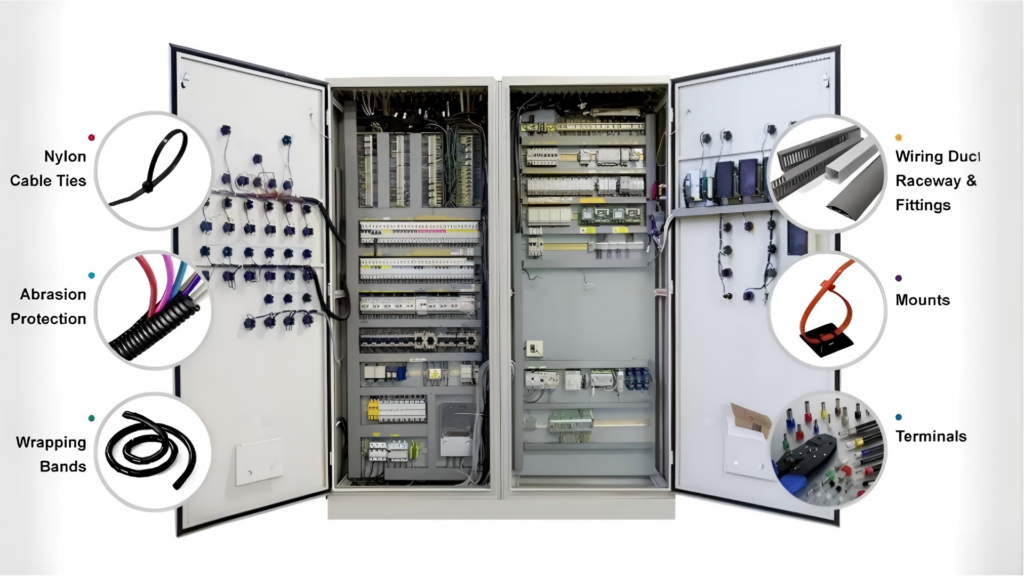
Cable ties, also known as zip ties, are simple fastening tools widely used to bundle, secure, and organize cables, wires, and other components. Despite their simple design, cable ties have become an essential accessory across many industries due to their versatility, ease of use, and low cost.
From household organization to industrial installations, cable ties serve many practical purposes. This article explains the common uses of cable ties, where they are applied, and why they are so widely relied upon.
Basic Purpose of Cable Ties
The primary use of cable ties is to bundle and secure items together. Once tightened, a cable tie locks in place and holds objects firmly without loosening under normal conditions.
Their one-way locking mechanism allows for:
- Fast installation
- Consistent holding force
- Minimal tools required
This makes cable ties an efficient solution for both temporary and long-term fastening needs.
Cable Ties in Electrical and Wiring Applications
One of the most common uses of cable ties is in electrical installations.
Cable ties are used to:
- Bundle electrical wires and cables
- Organize wiring inside panels and enclosures
- Secure cables along walls, trays, or conduits
- Prevent cable movement and strain
Proper cable management improves safety, airflow, and ease of maintenance, especially in commercial and industrial environments.
Cable Ties for Home and Office Organization
In homes and offices, cable ties help create tidy and functional spaces.
Common household and office uses include:
- Organizing computer and desk cables
- Securing power cords behind desks
- Bundling extension cords and chargers
- Organizing tools, hoses, or small items
Reusable cable ties are often preferred in these settings because they allow easy adjustments.
Cable Ties in Industrial Applications
In industrial environments, cable ties are used for much more demanding tasks.
Typical industrial uses include:
- Securing cables on machinery
- Organizing control panel wiring
- Fastening hoses and pipes
- Supporting cable routing in factories and plants
Heavy-duty nylon and stainless steel cable ties are commonly selected for their strength, heat resistance, and durability in harsh conditions.
Outdoor and Construction Uses of Cable Ties
Cable ties are widely used outdoors due to their convenience and weather resistance when properly selected.
Outdoor applications include:
- Securing cables in solar installations
- Fastening signage and temporary fencing
- Bundling garden tools and hoses
- Supporting wiring in construction projects
UV-resistant cable ties are essential for long-term outdoor use to prevent degradation from sunlight.
Cable Ties in Automotive and Transportation
In automotive and transportation industries, cable ties help manage wiring and components exposed to vibration and movement.
They are used to:
- Secure wiring harnesses
- Organize cables in engine compartments
- Fasten hoses and tubes
- Prevent abrasion from moving parts
Heat-resistant and vibration-resistant cable ties are commonly used in these applications.
Specialty Uses of Cable Ties
Beyond standard applications, cable ties are also used for specialized purposes.
Examples include:
- Stainless steel cable ties for high-temperature or corrosive environments
- Metal-detectable cable ties in food and pharmaceutical industries
- Flame-retardant cable ties in safety-critical installations
These specialty cable ties support compliance with industry regulations and safety standards.
Why Cable Ties Are So Widely Used
Cable ties remain popular because they offer:
- Low cost and high efficiency
- Easy installation without special tools
- Wide range of materials and sizes
- Flexibility across industries and environments
Their adaptability makes them one of the most commonly used fastening accessories worldwide.
Conclusion
The use of cable ties extends far beyond simple cable bundling. From electrical systems and industrial machinery to home organization and outdoor installations, cable ties provide a reliable, efficient, and versatile fastening solution. By selecting the right type of cable tie for each application, users can improve safety, organization, and long-term performance.
Understanding what cable ties are used for helps ensure they are applied correctly and effectively in any environment.